
New Energy Vehicles: A "Dual Upgrade" in Range and Efficiency
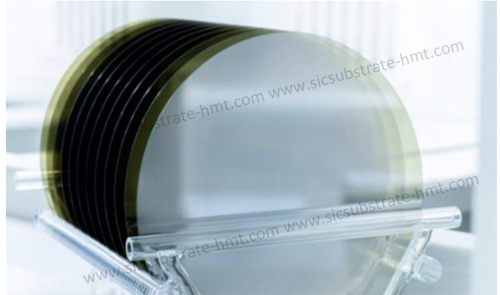
In the field of new energy vehicles, the application of silicon carbide (SiC) can be called a "technological revolution." HMT company focus on providing high performance 4H-N and 4H-SI SiC Substrates with favourable price for SiC Epitaxial wafers, SBD,MOSFET etc on the market. SiC power devices are widely used in core components such as on-board inverters and charging piles, becoming a key factor in improving EV performance.
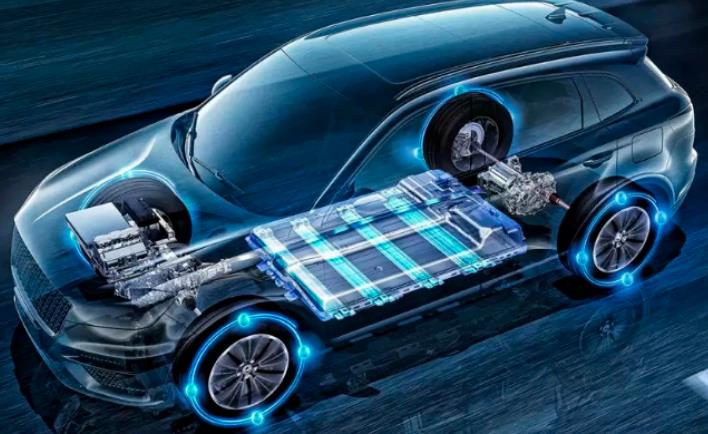
Taking the on-board inverter as an example, it is a core component of the EV powertrain, responsible for converting DC power from the battery into AC power to drive the motor. Traditional silicon-based IGBT inverters suffer from significant energy loss during operation, which not only reduces power utilization efficiency but also causes severe heat generation, requiring bulky cooling systems. In contrast, SiC MOSFET inverters demonstrate clear advantages, with energy loss being only 30% of that of silicon-based IGBTs. This means that EVs using SiC inverters can convert more electrical energy into mechanical energy with the same battery capacity, directly contributing to a 10% increase in range. The Tesla Model 3 is a typical example; it pioneered the use of full SiC power module inverters, reducing energy loss by 10% and successfully achieving a range exceeding 500 kilometers.
In charging piles, the application of SiC devices is similarly remarkable. With the popularization of EVs, the demand for faster charging speeds is increasing. Traditional silicon-based charging piles often struggle to meet high-power charging demands, resulting in slow charging speeds and low efficiency. SiC-based charging piles, leveraging their high-frequency and high-efficiency characteristics, can achieve faster charging. For instance, charging piles using SiC devices can reduce charging time by over 30%, significantly improving the user experience. Additionally, the high-voltage tolerance of SiC allows for smaller and lighter charging piles, making them easier to install and deploy.
5G Communications + Aerospace: "Performance Guarantee" for Extreme Scenarios
In the highly demanding fields of 5G communications and aerospace, silicon carbide, with its exceptional performance, has become the "mainstay" ensuring stable equipment operation.
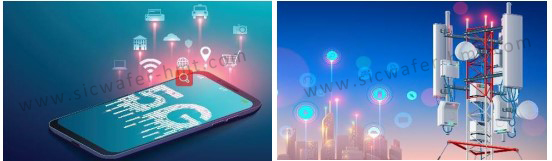
In 5G communications, base stations need to process high-frequency, high-speed signals, imposing stringent requirements on semiconductor device performance. SiC-based radio frequency (RF) devices, with their excellent high-frequency characteristics, meet the needs of 5G base stations. They can process high-frequency signals quickly and accurately, improving communication stability and speed. Compared to traditional silicon-based RF devices, SiC-based RF devices have lower signal transmission loss, effectively expanding signal coverage. Communication equipment giants like Huawei and Ericsson have widely adopted SiC-based Gallium Nitride (GaN-on-SiC) power amplifiers, expanding 5G base station signal coverage by 30% while reducing energy consumption by 40% and cutting single base station costs by over 15%. This not only enhances 5G network performance but also lowers operational costs, accelerating the widespread adoption of 5G.
 The aerospace environment is extremely harsh, demanding near-absolute stability and reliability from equipment. SiC's high-temperature resistance and radiation tolerance make it an ideal material for aerospace equipment. In satellites, spacecraft, and other devices, SiC components can operate stably under extreme temperature variations and radiation, ensuring normal equipment function. For example, in satellite communication systems, SiC-based RF devices can maintain stable signal transmission in high-radiation environments, ensuring smooth communication between satellites and ground stations. In aero-engine control systems, SiC sensors can accurately monitor engine operating status in high-temperature environments, providing reliable data support for stable engine operation.
Photovoltaics + Smart Grid: The "Core Support" for the Energy Revolution
Against the backdrop of the global energy revolution, photovoltaics and smart grids, as crucial components of the new energy sector, are facing unprecedented development opportunities. Silicon carbide, with its outstanding performance, has become the "core support" driving progress in these two fields.
In photovoltaic (PV) power generation systems, the inverter is the core component, converting DC power generated by solar panels into AC power for grid integration. Traditional silicon-based inverters have relatively low conversion efficiency, typically around 95%-96%, meaning a significant portion of electricity is lost during conversion. The application of SiC devices brings a qualitative leap to PV inverters. PV inverters using SiC MOSFETs or SiC MOSFET + SiC SBD combined power modules can achieve conversion efficiency exceeding 99%. This means PV systems can convert more solar energy into electricity, greatly improving energy utilization efficiency. The world's largest PV enterprise, LONGi Green Energy Technology, has announced that its next-generation inverters will fully adopt SiC solutions, a clear testament to the high recognition of SiC's application prospects in the PV field.
In the smart grid sector, SiC also plays a key role. With growing electricity demand and adjustments in energy structure, smart grids require higher transmission efficiency and stability. The high-voltage tolerance and low-loss characteristics of SiC devices make them ideal for key equipment in smart grids, such as HVDC transmission and solid-state transformers. In HVDC transmission, SiC devices can withstand higher voltages, reduce energy waste during transmission, and improve efficiency. Furthermore, the fast-switching characteristics of SiC devices can enhance grid response speed and stability, laying a solid foundation for building an efficient and stable new power system.
 E-mail: kim@homray-material.com;tina@homray-material.com
HMT Silicon Carbide (SiC) Wafer Website: www.sicwafer-hmt.com